Zanzibar’s year is shaped by two winds. The kaskazi blows from the north-east during the hotter months, broadly from December to March; the kusi comes from the south-east, bringing cooler conditions from around June to September. Between them fall the long rains, masika, from March to May, and the shorter vuli rains towards the end of the year.
For centuries, these winds carried dhows between the Swahili coast, Arabia and India, setting the timing of trade and the return passage. They still influence life along the coast — the movement of fishing boats, the use of outdoor spaces, and the way buildings are opened to the air or closed against the weather.
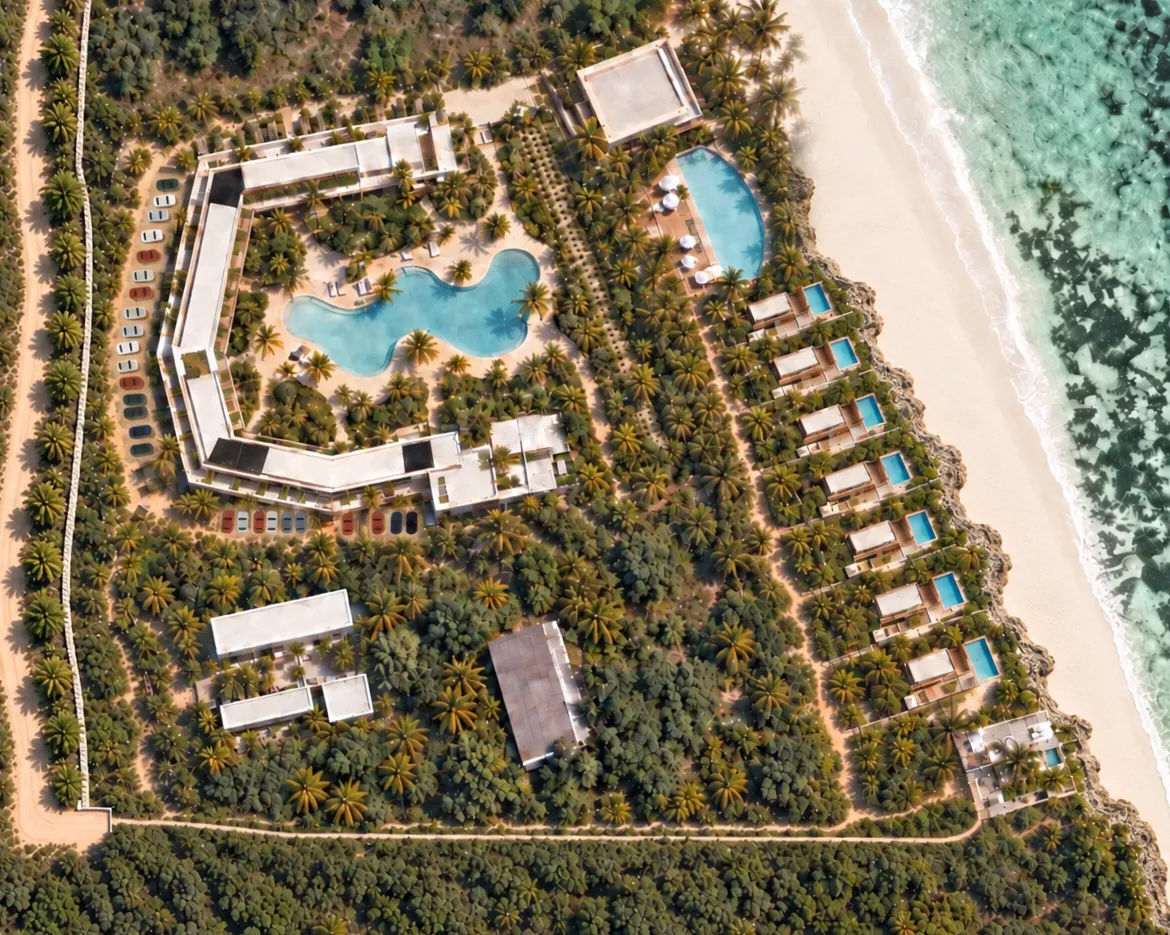
At Pongwe, Seasons faces east towards the Indian Ocean, catching the north-easterly kaskazi while remaining sheltered from the south-easterly kusi. Coconut palms rise above the tropical gardens, and the shoreline changes below them as tides, waves and seasonal winds move sand along the beach.
The best time to visit Zanzibar
September and October are good months for generally dry weather and easing winds. December to February brings hotter conditions and a warmer ocean, with strong kaskazi winds at times and considerable heat and humidity when they drop. June to August is cooler and generally drier. March to May brings the long rains, followed later in the year by the short vuli showers, interspersed with sunshine.
Each period gives the same place a different character. The distinction becomes more apparent on a return visit: warmer or cooler water, fresh growth in the tropical gardens, a broader stretch of sand where the beach has shifted since the previous stay.
Kaskazi, December to March: strong winds and humid lulls
The kaskazi brings the hotter part of the year. When the north-easterly blows hard, it can produce the strongest winds of the year; when it drops, conditions become very hot and humid.
The day changes with it. Early mornings draw people to the beach before the heat builds, while the hotter hours favour shade beneath the palms or time indoors. The ocean is generally warmer during these months, with conditions on the water changing as the wind strengthens and eases.
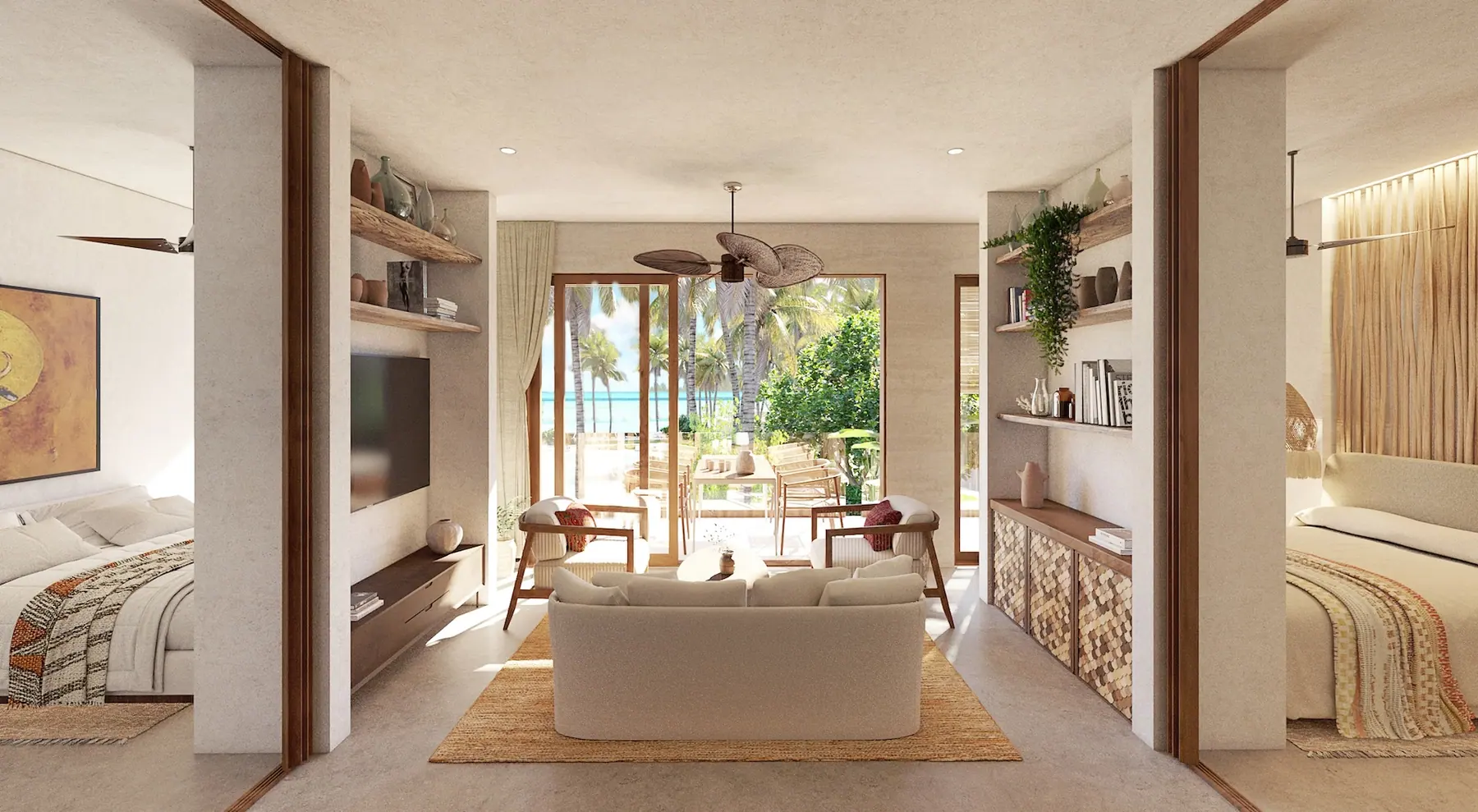
Experience of both the strong winds and the humid lulls has informed the redevelopment of Seasons. Indoor-outdoor spaces are oriented for a choice of shelter and exposure, with shade through the hotter hours and enclosed, cooled interiors when the air becomes still.
The planned beach club and clifftop infinity pool will give another setting above the shoreline, alongside the restaurant and spa. These spaces extend the day beyond the beach, with different parts of the estate coming into use as conditions change.
Zanzibar’s long rainy season: masika, March to May
The long rains usually begin during March and continue into May, with April generally the wettest month. Vegetation thickens, the ground darkens, and the tropical gardens become a more prominent part of the setting between the buildings and the ocean.
Rain changes the pace of the site. More time passes over lunch or indoors, with doors opened again when the weather clears. The coconut palms and retained coral walls sit within a landscape renewed by the rain, as new planting establishes around the existing elements of the estate.
At the redeveloped Seasons, private accommodation and shared hospitality spaces will give those wetter days room of their own — a longer meal at the restaurant, time at the spa, or an afternoon inside with the ocean still in view.
Kusi, June to September: cooler days at Pongwe
Around June, the prevailing wind turns south-easterly. The kusi brings cooler, generally drier conditions, and the ocean temperature eases with the season.
Seasons is sheltered from this wind, though stronger conditions can still be apparent in the open ocean beyond the reef. That shelter is part of the site’s appeal during these months, allowing comfortable use of the terraces, tropical gardens and beachfront.
July and August suit those who prefer less intense heat. Meals extend outside, more of the afternoon can be spent in the tropical gardens, and the cooler conditions give a different rhythm to the same spaces used during the kaskazi.
September and October: more time outside
As the kusi eases, September and October can bring warmth, generally dry weather and lighter winds. The day moves easily between the beach, pool and tropical gardens, with evenings extending over dinner outside.
For owners able to choose their dates, these months offer another window beyond the familiar Christmas and summer holidays. They are also worth considering for time on the coast following a mainland safari or Kilimanjaro climb.
Vuli, around November: short rains and sunshine
The vuli rains generally arrive around November, as the weather moves back towards the kaskazi. They tend to be short, interspersed with sunshine, leaving much of the day available for time outside.
Fresh growth returns to the tropical gardens. A shower may interrupt lunch on a terrace or a swim, with the afternoon opening up again once it passes. The warmth remains, and the clear spells bring people back towards the water.
Zanzibar weather by month
The arrival and strength of the winds and rains vary from year to year.
| Month | Usual pattern | The year at Pongwe |
|---|---|---|
| January | Hot and humid; kaskazi | Strong winds at times, humid lulls and a warmer ocean |
| February | Hot and humid | Early mornings outside; shade and cooling through the hotter hours |
| March | Hot; transition towards masika | Rain begins to change the landscape |
| April | Main rainy season | Tropical gardens thicken; more time indoors between clear spells |
| May | Long rains, often easing later | Fresh growth across the site |
| June | Transition towards kusi | Cooler conditions; ocean temperatures begin to ease |
| July | Cooler and generally dry; kusi | Shelter from the south-easterly supports time outside |
| August | Kusi continues | Cooler water and comfortable days around the estate |
| September | Generally dry; wind may begin to ease | More time between the beach, terraces and tropical gardens |
| October | Warmer transition between seasons | Often lighter winds and longer stretches outside |
| November | Short rains interspersed with sunshine | Fresh growth and outdoor time between showers |
| December | Return towards kaskazi | Hotter conditions, with strong winds possible |
The seasons at Seasons
The tide changes the beachfront through every day, drawing water back across the reef flat and bringing it towards the shore again. Over time, tides work with waves and seasonal winds to redistribute sand, with some stretches gaining it as others give it up.
The width and profile of the beach shift with that movement. Alongside changes in ocean temperature and growth in the tropical gardens, it gives a return visit something familiar and something different.
Seasons Residences is being developed within this setting. The residences will combine private indoor-outdoor space with access to the wider estate’s pools, beach club, restaurant, spa and gym, with professional management and 28 nights a year for owners’ personal stays.
The companion article, Designed for Zanzibar’s Seasons, explains how knowledge of this beachfront has informed the design.